

Beginner Photography

CAMERA CONFIDENCE IN 2 HourS

Your Photography Journey Starts Here

Reserve My Class/ Gift it

Limited to Just 6 Attendees per Class

Beginner's Level

Beginner Digital Photography


Life Is Too Short to Let the Moments That Matter Fade


Equipment Provided

Mirrorless cameras, DSLRs and iPhone 18 models welcome


You can learn photography someday—but you can’t retake the moments you miss today. Learn now, so you’re ready when it matters.


This hands-on beginners’ photography class will help you understand your camera, develop a photographer’s eye, and start taking better photos—in just two hours.


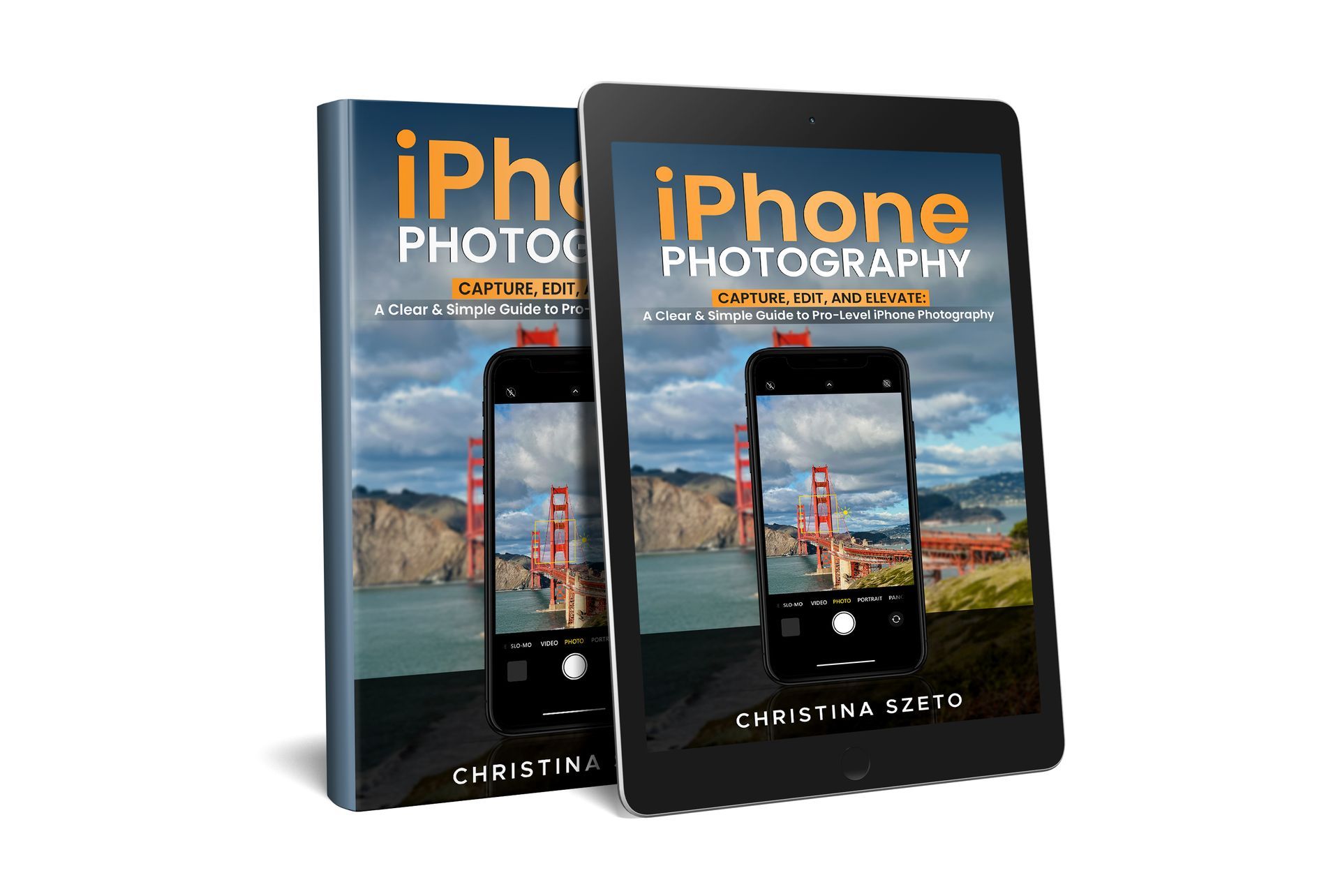
No experience required, camera provided if needed. This class is also for Iphone 18 photographers as the phone is a real camera that has variable apertures and shutter speeds.


This workshop is designed for beginners who want to master a mirrorless camera, DSLRs or Iphone 18 (a real camera).


You don’t need any previous experience—or even your own camera. If needed, we’ll provide you with a Canon R50 mirrorless camera to use during the class. If you already own a camera, bring it along and learn how to use its settings with confidence.


Own an iPhone 18 Pro or Pro Max? You’re welcome to bring it and explore its advanced camera controls, including aperture and shutter speed. Discover how these settings influence light, background blur, and motion—giving you greater creative control over every photograph.


Imagine Knowing How to Create the Photograph You See in Your Mind


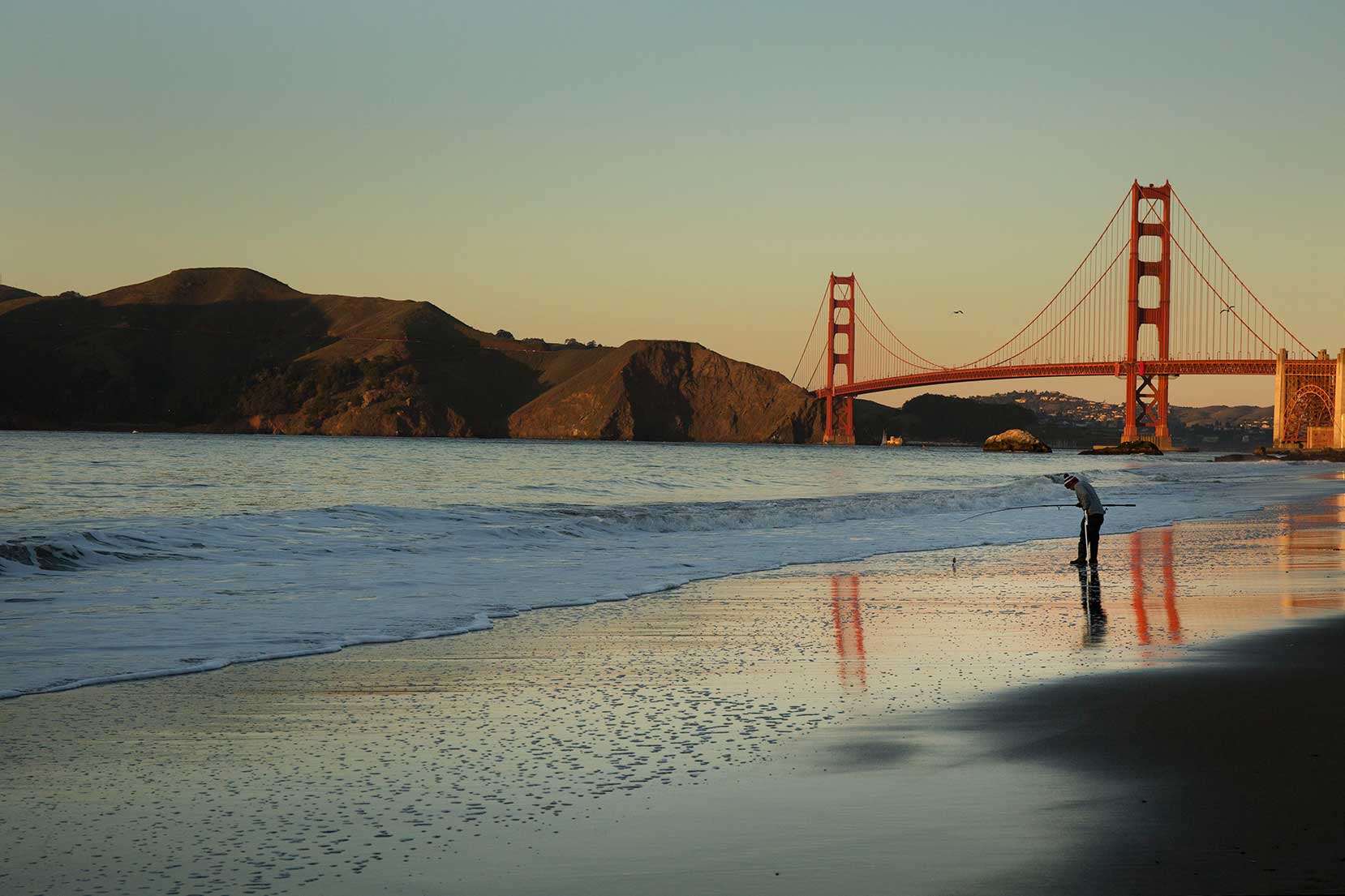
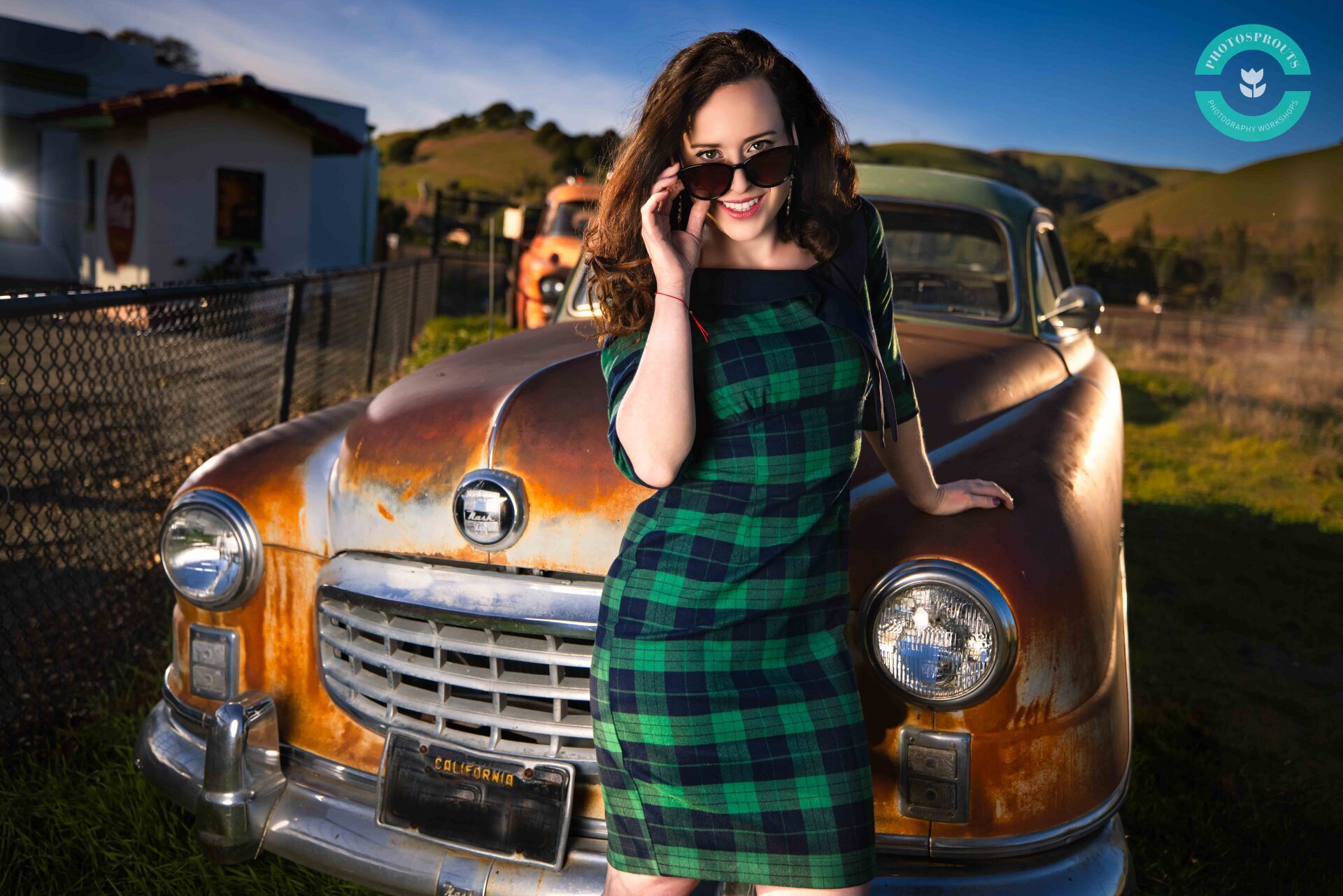
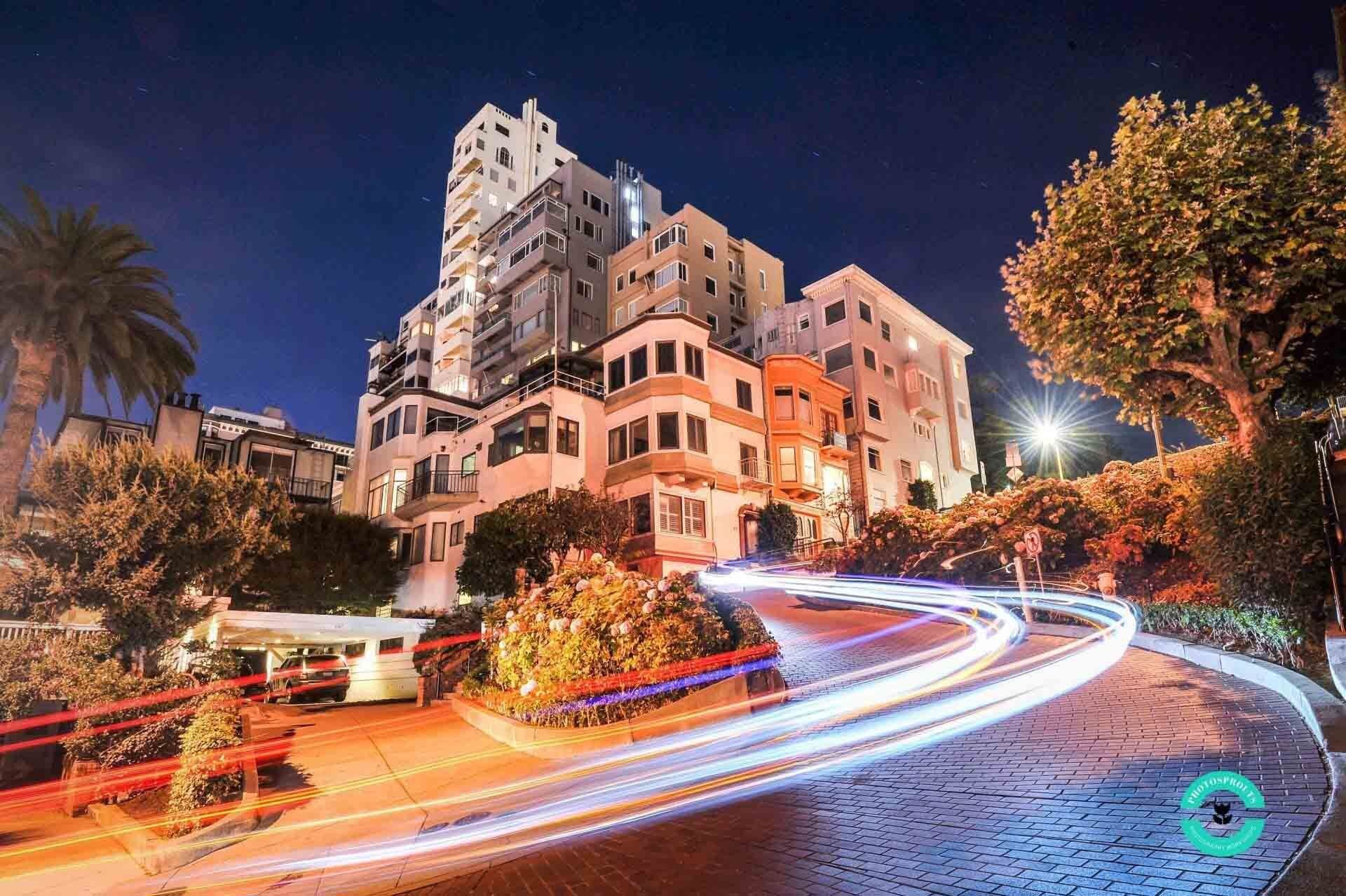
A portrait with a beautifully blurred background. The movement of a busy street. Light falling perfectly across an everyday scene.


Photography changes the way you experience the world. You begin noticing light, expressions, colors, and fleeting moments that others may overlook—and you gain the confidence to preserve them beautifully.


Photosprouts’ Beginners’ Photography Class gives you that first breakthrough. In two hands-on hours, complicated camera settings begin to make sense because you’ll put every concept into practice as you learn it.

You’ll Leave the Class Seeing Differently


By the end of the workshop, your camera will no longer feel like a confusing collection of buttons.


You’ll learn how to:

  • Create a sharp subject with a soft, beautifully blurred background
  • Understand how light, focus, and camera settings work together
  • Make intentional creative choices instead of relying on Auto mode
  • Recognize photographic opportunities wherever you go


This is more than an introduction to camera settings. It is the beginning of seeing—and expressing—the world as a photographer.


Only Six Attendees—So You’re Never Lost in the Crowd


Photography is best learned through practice and personal guidance.


With only six attendees, your instructor can observe how you’re using the camera, answer your questions, and make sure each concept clicks before moving forward.


If you see a date that works for you, reserve your place before the class fills.


Earn Your Photosprouts Certificate in Photography Fundamentals


The Beginners’ Workshop is the first step toward earning the Photosprouts Foundations of Photography Certificate. Complete the Beginners’, Intermediate I, and Intermediate II Workshops to receive your personalized digital certificate.


Teenagers Ages 12 and Up Are Welcome


Young photographers don’t have to wait until summer camp to begin learning. Teenagers ages 12 and up are welcome to join our regular Beginners’ Photography Classes.

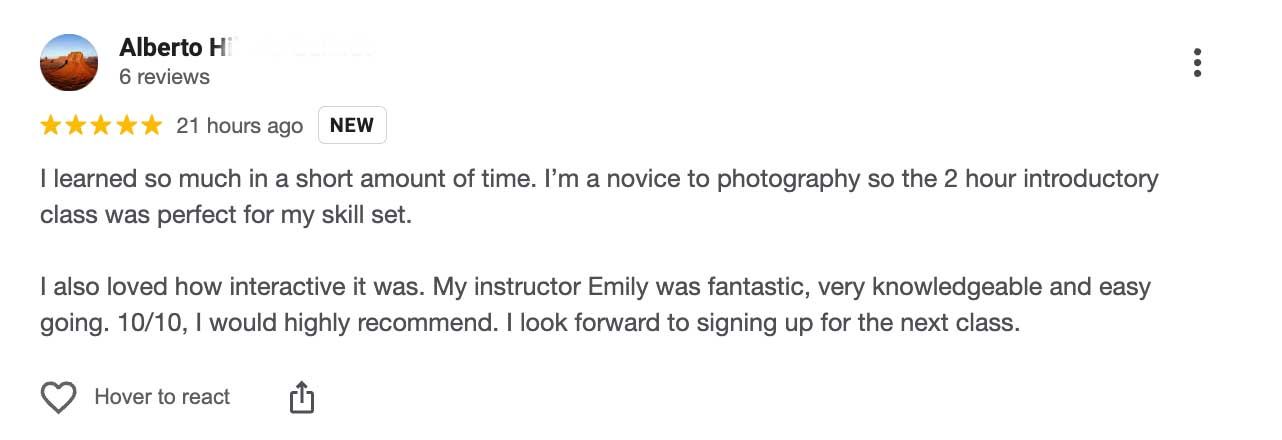
"I Finally Understand My Camera"

Featured Reviews
Read More Reviews

Quick Facts

Beginner
Duration 2 hours
Date & time (San Francisco) Saturdays 10am-12pm
Some weekdays after-work hours
Equipment provided Canon R50 Mirrorless Camera
Class size Max. 6
Pricing $145
Prerequisite No
Location: 535 Mission Street, San Francisco CA 94105

Your Photography Breakthrough

Can Happen This Week


Choose a convenient Saturday morning, Thursday or Friday after-work class

  • Location:

535 Mission Street, San Francisco


Saturdays


September 26th, 2026, Saturday, 10am-12pm

2 spots left


October 3rd 2026, Saturday, 10am-12pm


October 10th 2026, Saturday, 10am-12pm


October 17th 2026, Saturday, 10am-12pm


October 24th 2026, Saturday, 10am-12pm


Wednesdays


September 30th 2026, Wednesday, 6-8pm


October 7th 2026, Wednesday, 6-8pm


Thursdays


September 24th 2026, Thursday, 6pm-8pm

(No more Thursday Classes after 9/24)


Fridays


October 30th 2026, 5pm-7pm

Reserve My Class/ Gift it


You can also:


Policy


  1. Rescheduling is only allowed ONCE and at least 3 days prior to the start of the class.
  2. We kindly ask you not to reschedule unless you really have to, as we only take 6 attendees in a class.


Bundled Discount Codes

BUNDLED12

Save  $25

Beginner + Intermediate I or II

BUNDLED23

Save $50

Intermediates I & II

BUNDLED123

Save $100

Beginners + Intermediates I & II

What You’ll Be Able to Create?

  1. Take creative control instead of hoping Auto Mode gets it right.

2. Create photos that are bright, clear, and intentional.

3. Create beautifully blurred backgrounds or keep an entire scene sharp.

4. Freeze exciting action or show movement creatively.

5. Capture crisp, eye-catching photographs.

6. Create portraits and details with beautiful background separation in the Aperture Priority Mode.

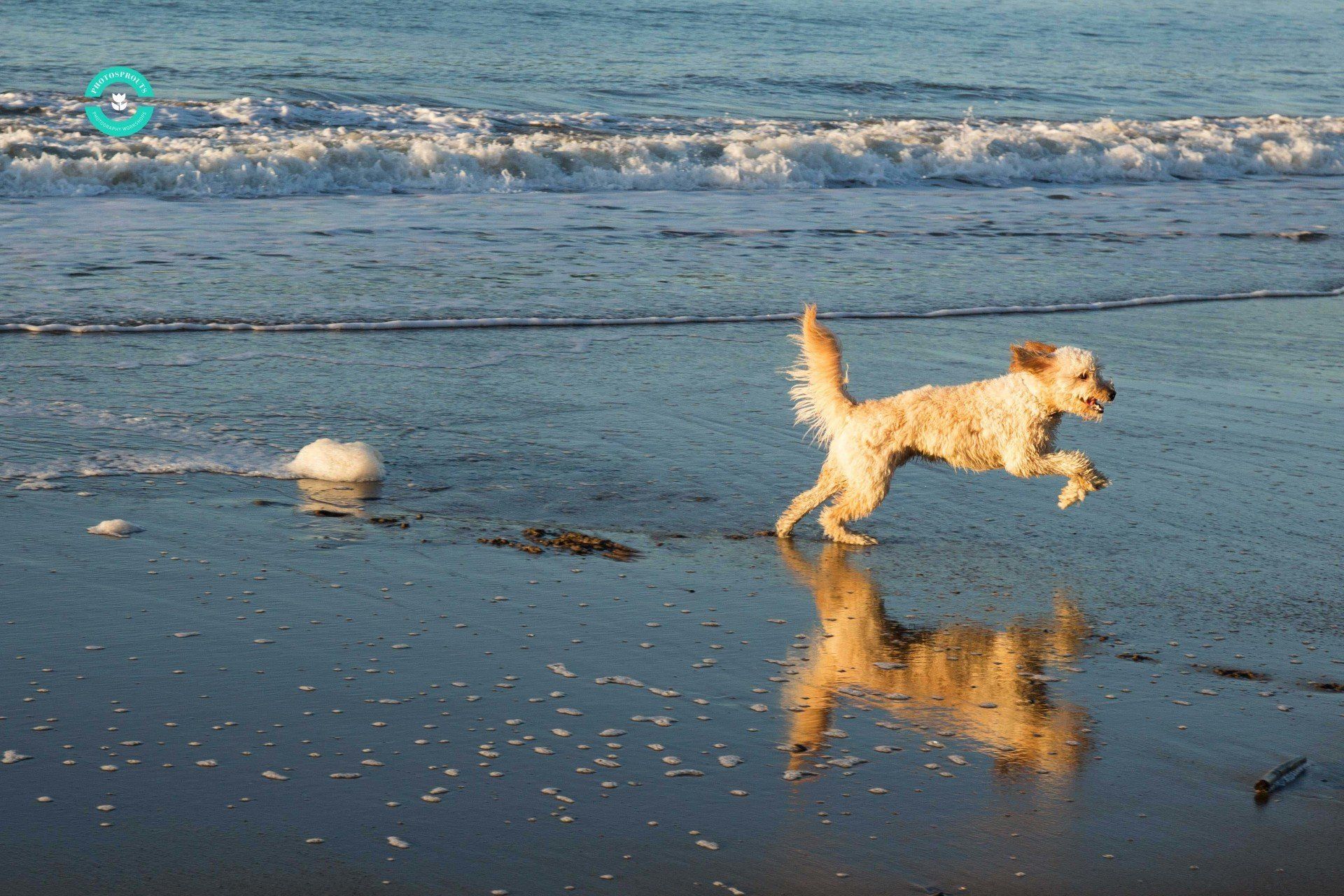
7. Photograph pets, sports, and moving subjects with confidence in the Shutter Speed Priority Mode.

8. Know exactly which settings matter—and ignore the ones that don’t.

Share this class

Start To Take The Pictures That You Love:



  • Slide title

    Write your caption here
    Button
  • Slide title

    Write your caption here
    Button
  • Slide title

    Write your caption here
    Button
  • Slide title

    Write your caption here
    Button
  • Slide title

    Write your caption here
    Button
  • Slide title

    Write your caption here
    Button
  • Slide title

    Write your caption here
    Button
  • Slide title

    Write your caption here
    Button
  • Slide title

    Write your caption here
    Button
  • Slide title

    Write your caption here
    Button

Fall in Love With Photography

Before Buying a Camera

You might have bought a camera based on a photographer friend’s recommendation—only to find it frustratingly hard to use. Or maybe you watched YouTube reviews that skipped over the camera's downsides, which you only discovered after making the purchase. Sometimes, a friend or family member gifts you a camera, but you’re not quite sure how to use it.


We genuinely believe the Canon R50 (And no, we’re not sponsored—Canon doesn’t shower their fans with as much love as Sony does!) is the best beginner-friendly camera out there. It’s easy to use, yet powerful enough to grow with you as your photography skills improve—that’s exactly why we provide it in class.


If you've got your equipment already, that's perfect, just bring it to the class and we'll teach you how to use it.


Here are 7 essential tips (and traps to avoid) to help you choose the right camera with confidence.


FAQ

  • Shall I also sign up the Intermediate I & II Workshops?

    We strongly encourage you to sign up this class together with the Intermediate I & II Workshops to get a comprehensive knowledge in the basics of photography. You will be able to shoot proficiently in the Manual Mode after completing the Beginner & Intermediates Workshops.

  • What’s the recommended time gap between the Beginner, Intermediate I, and Intermediate II Workshops?

    You can definitely take the Beginner and an Intermediate Workshops on the same day for the best learning momentum. However, if spending 5 hours in a single day feels too overwhelming, taking an Intermediate Workshop the following week works just as well.


    Intermediate I and II are actually independent of each other, as each focuses on a different skill set—so it’s totally fine to take Intermediate II before I if the scheduling works out that way.


    Ideally, I recommend completing the three workshops over the course of 3 weeks—one per week—so you have time to absorb and apply what you learn. A faster option would be to do Beginner and an Intermediate (I or II) on the same day, and then the next Intermediate (I or II) the week after.


    No matter which schedule you choose, giving yourself time to practice in between is key to building your confidence and skill.


  • Why Canon equipment is provided, and not other brands?

    We genuinely believe that Canon cameras are among the most user-friendly cameras for learning photography. They are intuitive to use, fast to focus, and capable of producing beautiful, high-quality images.


    We are not sponsored by Canon, and we do not get paid for using their cameras. This is simply our honest recommendation based on years of teaching photography to beginners.


    Out of all the cameras in the market, the Canon R50 is the best for beginners' to learn photography. After the class, you will get to decide which brand/ model to purchase.


    That said, we are also experienced with other camera brands, including Fuji, Sony, Nikon, Panasonic, Olympus, and Leica.


    And eventually, you will be too.


    Once you understand a few core camera settings, you can apply that knowledge to almost any camera system. In our workshops, we teach you the fundamentals clearly and practically, so you can feel confident shooting with the camera you have — and with any camera you may use in the future.

  • Can I use my own equipment?

    Yes, you can bring and use your own equipment during the class.

  • Is the equipment provided in the Beginners' Workshop the same as in the Intermediate Workshops?

    Yes, both Canon R50 Mirrorless Cameras are provided in the Beginners and Intermediate I and II Workshops.

  • Why is a mirrorless instead of a DSLR camera is provided?

    Previously, we provide the Canon T6 DSLR during the class.


    However, with the advancement of technology, a mirrorless camera is way more powerful and capable than a DSLR camera. 


    On average, one only needs 5-15 seconds to determine the exposure and composition in a mirrorless camera, vs 30-60 seconds in a DSLR camera.


    As a responsible photography education company, it is our mission to teach what's best for students, rather than sticking to using old technology.


    To be honest, DSLR cameras will be phased out soon.


    Here're the advantage of mirrorless cameras over DSLRs:


    1. Technological Advancements

    Modern Technology: Mirrorless cameras represent the forefront of photographic technology. Unlike DSLRs, which use a mirror mechanism to reflect light into an optical viewfinder, mirrorless cameras are built without this mechanical mirror system. This difference makes mirrorless cameras more compact and mechanically simpler, reducing the chance of mechanical failure and often resulting in lighter, more portable devices.


    Electronic Viewfinder (EVF): Mirrorless cameras utilize electronic viewfinders, providing real-time exposure and focus previews. This feature allows students to see exactly how adjustments will affect the final image, enhancing their learning and understanding of photographic concepts.


    2. Image Quality and Performance

    Superior Autofocus Systems: Mirrorless cameras generally offer more advanced autofocus (AF) systems including the game-changing Eye AF. 


    Continuous Shooting Speed: Without the mechanical mirror flip of DSLRs, mirrorless cameras often achieve higher continuous shooting speeds, beneficial for action and sports photography modules within the class.


    3. Future-Proofing Skills

    Industry Trend: The photography industry is rapidly moving towards mirrorless technology. Major camera manufacturers are focusing their research and development on mirrorless systems. By using mirrorless cameras, students will be learning on equipment that aligns with current and future industry standards, preparing them for professional environments.


    4. Practical Advantages in Learning

    Real-Time Feedback: The electronic viewfinder and live view on the LCD screen give students immediate visual feedback on exposure, white balance, and other settings, helping them learn faster and understand the impact of their adjustments in real-time.


    5. Silent Shooting: Many mirrorless cameras offer silent shooting modes, eliminating the noise of the shutter. This feature is beneficial in settings where noise is a distraction, such as wildlife photography or quiet environments, allowing students to capture images without disturbance.


    6. Price match

    Investing in mirrorless systems can be more cost-effective and even less expensive, especially as DSLRs become obsolete and manufacturers shift their support towards mirrorless technologies.


  • What's the difference between a DSLR and a mirrorless camera?

    You'll learn the difference between a DSLR and a mirrorless camera in great detail in the Beginners' Workshop. In summary, the advantages of mirrorless cameras over traditional DSLRs are:


    1) Faster focusing.


    2) Captures an image electronically rather than optically, allowing more accurate focusing.


    3) Have Eye AF (automatically places and locks the focus on a human/ animal eye, resulting in sharper portraits).


    4) Allows live view shooting, which means the users can instantly see the exposure and composition on the LCD screen. Note that the "live view mode" of a DSLR camera do not work in the same efficient way as a mirrorless one.


    5) Lighter.


    6) Will fully replace DSLR cameras in a few years.


  • The camera that I own is DSLR, will I still be able to learn how to use it?

    Yes, you can!


    There are only 5 core and universal settings that you need to know to shoot on any cameras, including mirrorless and DSLR cameras.


    However, DSLR cameras  are using old technology and will give you a harder time to change the focus point and nail the exposure. You have to do multiple trial-and-errors in order to determine the exposure and composition. The process can take up to 60 seconds. 


    As for mirrorless cameras, changing the focus point is extremely easy and you can also instantly preview the composition and exposure before a shot is take. The process may take as short as 5 seconds. 


    While you can still apply the knowledge that you learn in the class with a mirrorless camera to your DSLR, you'll hate the old technology in it.


    The photography industry is rapidly moving towards mirrorless technology, and DSLRs doesn't worth that much in the used market. We recommend you to sell your DSLR equipment as soon as possible when it still has a little value, and use the money to go fully mirrorless. 

  • Can I bring a friend/family to the class?

    Unforunitely, the answer is no, even the guest is willing to wait in the building's public area instead of the classroom.